The Hidden Tax of Per-Seat Pricing on Small Teams
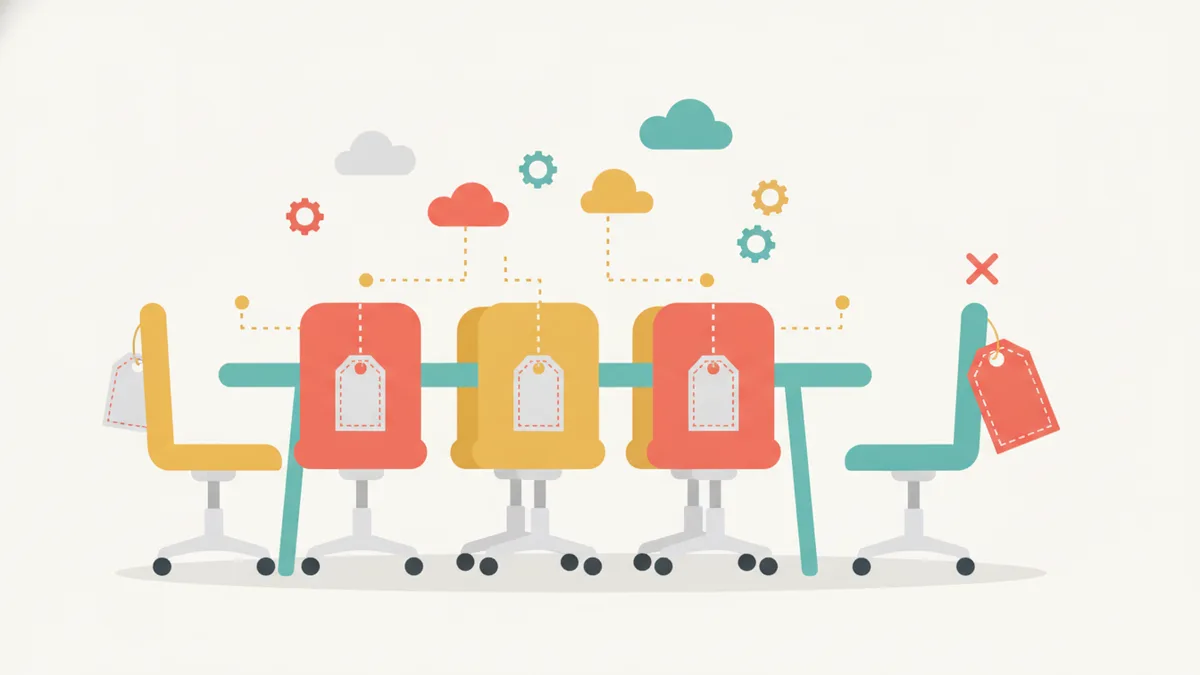
There is a moment that happens in every small team using per-seat software, and it usually happens in a chat thread that takes less than a minute.
Someone asks: "Can we add Dana to the support tool? She's helping with tickets this month." And someone else replies: "That's another $29 a month — can she just tell us what she needs and we'll look it up?"
Nothing dramatic occurred. No budget meeting, no procurement review. But a decision just got made: a person who should have access to a tool will not have it, because access itself is the thing being metered. Multiply that small moment across every contractor, part-timer, co-founder, and "just needs to see it" stakeholder, and you get the hidden tax of per-seat pricing — paid not in dollars, but in all the collaboration that quietly never happens.
The tax, itemized
The contractor who can't see tickets. You bring in a freelance developer for six weeks to fix the bugs customers keep reporting. The bug reports live in your helpdesk. A seat costs more than feels justified for six weeks, so instead the contractor works from screenshots and pasted summaries. Context gets lost in translation. The person fixing the bugs is the one person who cannot read them in full.
The co-founder sharing a login. Two founders, one seat, one set of credentials in a shared password vault. It works, mostly — until both are logged in at once and the tool's "who did what" history becomes fiction. Every reply says it came from the same person. Notification settings serve whoever configured them last. And you are now in breach of terms of service you agreed to, which is an odd position for founders to normalize on day one.
The part-timer routed around. The support person who works ten hours a week gets a seat; the developer who could answer the two technical tickets a day does not. So technical questions get copy-pasted into Slack, answered there, and copy-pasted back — a human message bus doing, slowly and lossily, what access would do instantly.
The visibility nobody buys. Plenty of people around a product need to read — a designer checking what users complain about, an advisor skimming ticket themes before a call. Read access rarely justifies a full-price seat, so it simply doesn't happen, and decisions get made by people who have never seen a customer's actual words.
Each workaround has the same shape: the money was saved, and the cost was moved somewhere it is harder to see.
Why the incentive is backwards
Here is the structural problem, and it is worth stating plainly: the value of collaborative software scales with connections, but per-seat pricing charges per head.
A helpdesk with one agent in it is a ticket list. With the whole team in it, it becomes something else — the developer sees the bug report firsthand, the founder notices a pricing complaint recurring, the support person assigns instead of forwarding, and the tool's history becomes the team's shared memory. The product's value grows roughly with the number of connections between people using it, which grows much faster than headcount.
Per-seat pricing charges linearly for heads while the buyer's cost tolerance on a small team is basically flat — which means every additional person triggers a fresh cost-benefit debate. And each debate has a built-in bias: the seat's cost is precise and immediate ($29/month, right there on the invoice), while its value is diffuse and delayed (faster answers, fewer relays, better context). Precise-and-immediate beats diffuse-and-delayed in almost every quick budget call, even when the math over a quarter says otherwise.
So buyers do the rational thing given the incentive: they restrict access. And here is the perverse part — every restricted seat makes the product itself less valuable. Fewer people inside means more copy-paste relays around it, staler information in it, and weaker network effects for the vendor's own tool. Per-seat pricing invites the customer to degrade the product they are paying for. Nobody wins, including, in the long run, the vendor: a tool that half the team is locked out of is a tool that is easy to churn from.
There is also a small daily friction cost that never shows up on invoices: with seats, every personnel change is a billing event. Someone joins, someone leaves, someone goes part-time — each is a trip to the billing page. Flat and usage models make personnel changes a permissions detail instead of a purchasing decision, which is what they should have been all along.
What aligns better for small teams
The alternative is to price the thing that actually tracks value delivered, and let people be free.
- Flat tiers — one price for the whole team, with tiers stepping on capacity (projects, volume, features). Predictable like seats, but with the access-restriction incentive deleted. Adding Dana costs nothing, so Dana gets added, so the tool works.
- Usage-based pricing — pay for tickets processed, emails sent, events ingested. Cost now scales with the value the product actually mediates, not with how many humans are allowed to look at it. (The trade-off is variance: usage bills need caps and alerts to stay unscary.)
For collaborative tools aimed at small teams, both beat per-seat because they make the right behavior — everyone who needs access has it — the default rather than a negotiated expense. This is why Helmdesk prices flat per plan with no per-seat charges: on a support tool specifically, the entire point is that the whole team can see and answer customers, and a pricing model that discourages exactly that is working against the product.
The honest counterpoint
Per-seat pricing is not a scam, and it is worth being fair about why it dominates.
Seats are predictable and legible. A CFO can forecast seat costs to the dollar for the year. Usage bills wobble. For budget-conscious buyers, "same invoice every month" is a genuine feature, and seat models deliver it simply.
Some products really are seat-shaped. When value accrues to individuals rather than to the group — a personal IDE license, a design tool where each seat is one person doing their own work, a sales tool where each rep works their own pipeline — per-seat is honest pricing. Ten designers get roughly ten times the value of one. Charging per seat there aligns fine.
Seats are a crude but workable fairness proxy. A 200-person company pays more than a 4-person one without anyone building a usage-metering pipeline. From the vendor's side, that is cheap price discrimination that roughly tracks ability to pay.
The distinction that matters is where the value lives. If your product gets better when more people are in it — shared inboxes, wikis, project trackers, anything whose point is a shared view of reality — per-seat pricing taxes the exact behavior the product depends on. If your product's value is consumed individually, seats are fine. The mistake is applying seat logic to connection-shaped products, and small teams are where that mistake hurts most, because small teams are precisely the buyers for whom one more seat is a real decision.
The question to ask
Next time you evaluate a tool, skip past the per-seat price and ask the revealing question instead: if this cost the same no matter how many of us used it, who would we add tomorrow?
If the answer is "several people, obviously" — the contractor, the co-founder, the part-timer, everyone currently being routed around — then the seat model is not just pricing the tool. It is pricing your team's ability to work like a team, and that is a tax worth refusing.
Your whole team. One price.
Helmdesk has no per-seat pricing — every plan covers your entire team across all your projects, so access is never a budget decision.